Clothing, Household, Organization, Closet, Cleaning

Moss Covered Felted Stones

"A rolling stone gathers no moss." Quite true. Also true... stones in the Michigan forests don't do much rolling :)  They also get enough shade and dampness to cover most of the stones with moss. For a long time I've been wanting to make some Felted Stones for my house and the gnome's home. When I finally set to doing it this morning, I made a couple, and they just didn't look right. "Ah", I thought. "They need moss!" So the next couple I made I added moss and, "Yep, those look the rocks we find around here!"

To make your own pile of of Felted Stones, collect stones, pull out your roving, and get started. Below are directions for felting stones... with moss, thank you very much!

Materials:
rocks, assorted sizes
roving in natural colors... off white, greys, browns, and moss green
cheese cloth
dish soap

Thoroughly wash your rock to remove dirt and moss.

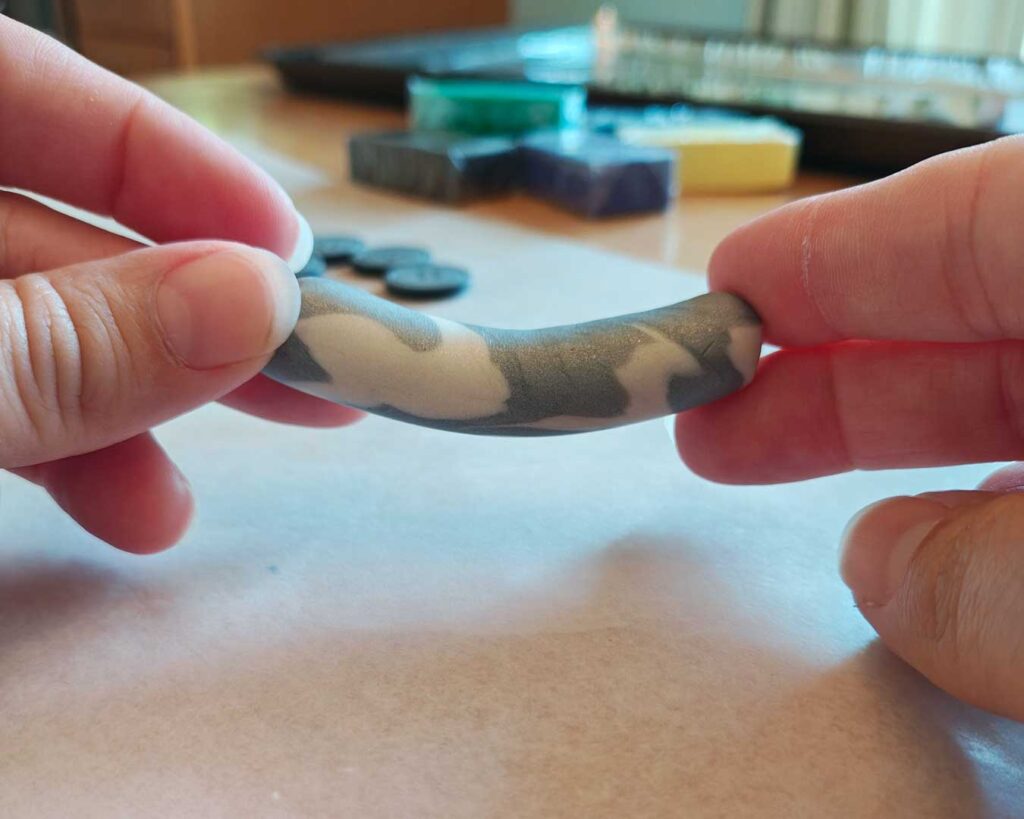
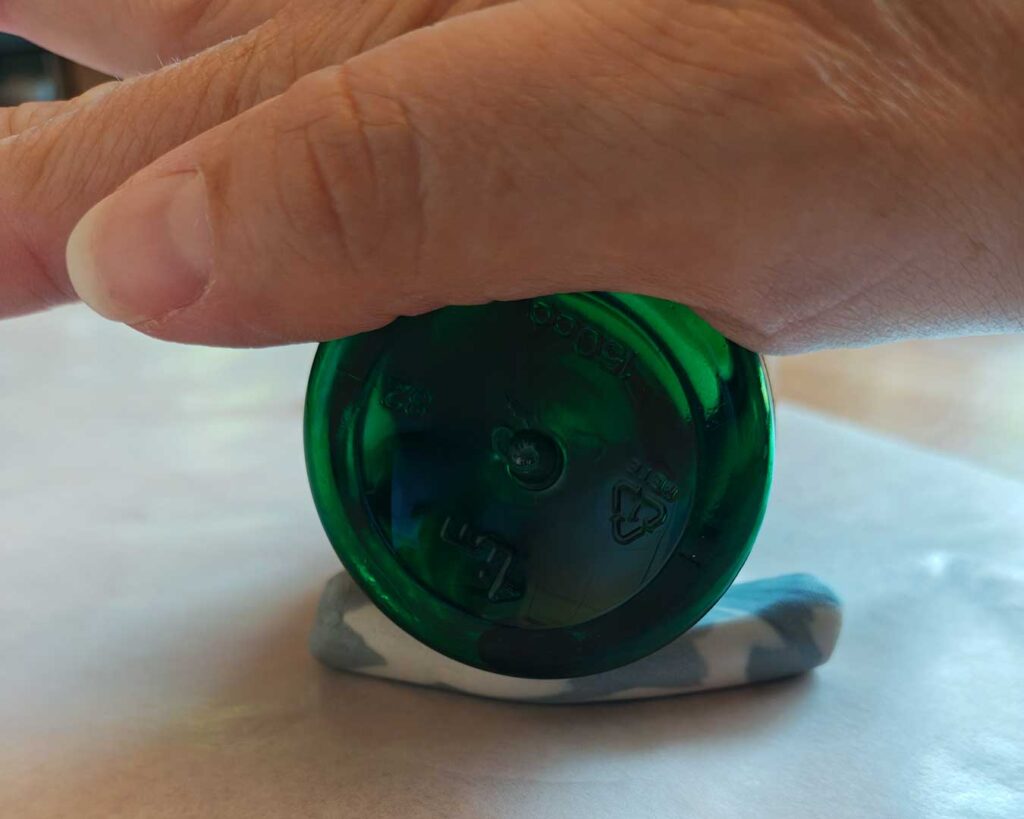
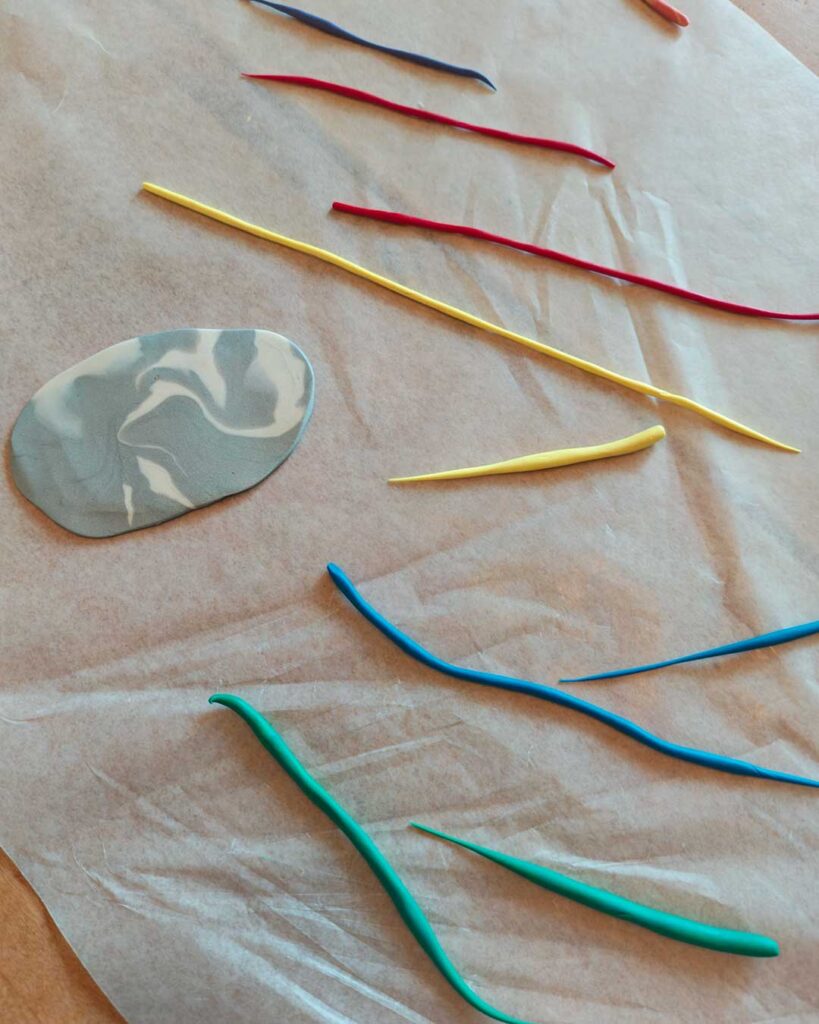
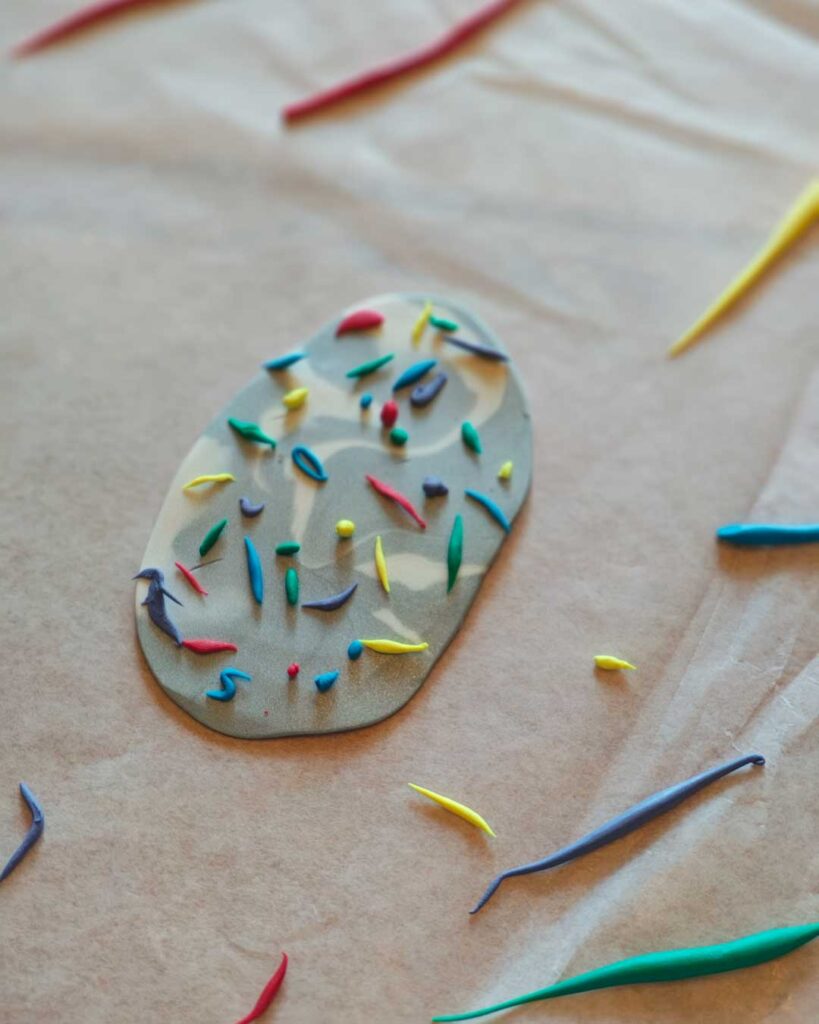
Wrap your rock in roving. It is better to wrap in multiple thinner layers than I heavy layer. Also, change directions so fibers criss cross. Add character to rock by placing thin pieces of contrasting roving over the rock. If you are adding moss, add thin pieces at the end.


Carefully wrap the rock in cheese cloth going around and over the ends. Wrap firmly, not tight.

Submerge the rock in hot, soapy water. Squeeze and rub the roving covered rock between your hands,  dipping it back in the water frequently.


As soon as you feel the roving beginning to firm up, remove the cheese cloth and finish felting. You can tell it is done when the roving feels firm and smooth.


Run under cool water until all the soap is gone . The change in temperature will help set the recently felted wool. Use a dry towel to soak up the extra water on the stone.

Allow to dry, then use in any way you wish! Perhaps a paperweight? A basket of stones? A tower? Surround your gnome home with a little atmosphere? Who knows? :)

http://www.weefolkart.com
Copyright © Wee Folk Art 2008 - 2011. All rights reserved.
All photos, text and patterns are copyright protected. You may not copy, reproduce or redistribute any material found on WeeFolkArt.com without written permission. Wee Folk Art retains all rights.


Pixie's Rainbow Coiled Rag Bowl Revised


I absolutely feel in love with this Coiled Rag Bowl last summer. I made this bowl to hold all the other rainbow gifts I made for Pixie's birthday. I've meant to return to this project and make other containers using this technique, but alas, I have yet to. Hmmm... The roping can be coiled around something as small as a juice glass, or as large as your stainless steel apple bowl! When using a form, the only trick to remember is the sides have to be straight or flare out as you are working. If your ring ever gets smaller than the one before it, you won't be able to get it off your form!

Think of the colors, think of the shapes, and think of the purposes these bowls can be used for!
Directions for how to make your own Pixie's Rainbow Coiled Rad Bowl can be found HERE! If you didn't make one last year, isn't it time your tried!

Doorstop Bunny

My mom is still under the weather but she asked me to go through her rough draft post and see if I couldn't get the pattern up for everyone. I think I got all the links and such working (let me know if you notice something missing).

I must say, I think this little guy might be the cutest in the bunch so far. My girls were excited to see him. Pippin will make a great spring guest in your home. Enjoy!

Materials: (yardages are approximate and based on optimal placement)
Felt
Embroidery floss
2 3/4" buttons with 4 holes for eyes
2 12” pipe cleaners
Stuffing (wool or polyfil)
Beans, fish gravel or large grained sand for weighting the bottom
Pattern

Note: My felt was from Wool Felt Central. I used the following colors:
Haybale (TOY2617) for the front, back, ears and base
Driftwood (WCF2619) for the muzzle, chest and tail
Antique White (WCF1102) for the eyes
Blushing Bride (WCF0942) for the inner ears and nose

IMPORTANT: If you haven’t done so already, read our tutorial on cutting out felt found HERE.

Directions: (All seams are 1/4" unless otherwise noted.)
Download pattern and make copies.

Cut out pattern pieces as follows:
1 front and back
4 ears
1 base
1 muzzle
1 chest
1 tail
2 eyes
2 inner ears
1 nose

Using the pattern as a guide, pin or staple pieces on the front and back of bunny. Note: the eyes will be tucked under the muzzle as shown on the pattern.

Applique in the following manner:
Using a blanket stitch and 3 strands of floss, sew on eyes.
Using a running stitch and 2 strands of floss, sew on muzzle, chest and tail.
Using a running stitch and 2 strands of floss, sew on nose.

Embroider the face in the following manner:
Transfer facial detail to muzzle.
Using a stem stitch and 6 strands of floss, embroider mouth.
Using French knots and 6 strands of floss, embroider whisker spots.

Sew on eyes using 6 strands of floss, crisscrossing through the 4 holes.

Optional: If you would like to, embroider the bunny’s name on the bottom using a stem stitch and 6 strands of floss.

To make the ears begin by laying an inner on top of 2 layers of ears. Using a running stitch and 2 strands of floss, sew the inner ear to the ear going through all 3 layers.

Take a pipe cleaner and lay it between the 2 layers of ears between the running stitch and the edge. Allow the pipe cleaner to overhang by about 1”.

Using a blanket stitch and 3 strands of floss, sew the 2 outer edges of the ears together, trapping the pipe cleaner as you sew around the ear. Gently bend the pipe cleaner around the top of the ear.

Clip off the extending pipe cleaner so it is even with the edge of the ear.

Do the same for the other ear making it in the mirror image of the first ear.

Mark the unfinished edge of the ears ½” from edge.

Position the ears on the front of the bunny, with right sides together, following the markings on the pattern, allowing the ears to overlap the ½”. Pin in place.

With right sides together, stitch front to back leaving a 2 1/2” opening as indicated on the pattern. (This opening will be used to turn bunny right side out after the bottom has been added.) Make sure to backstitch at the beginning and end stitchling lines seams do not unravel during the turning process. (This step can be done be by hand or with a sewing machine. If sewing by hand make sure to use very small stitches.) Note: Be careful when sewing over the ears, since there are pipe cleaners in them. If you go very slowly, you shouldn’t break your needle.

To reinforce the ears and to help them stand up straight, sew a second stitching line between the seam and the edge where the ears are attached.

With right sides together, pin bottom in place matching side seams and notches. Sew in place.

Turn bunny right side out.

Using beans, gravel or sand, fill the bottom of the bunny to the opening.

Fill the remainder of the bunny with wool or polyfil. Pack firmly without stressing seams.

Using a blind stitch, sew up opening.


http://www.weefolkart.com
Copyright © Wee Folk Art 2008 - 2011. All rights reserved.
 
All photos, text and patterns are copyright protected. You may not copy, reproduce or redistribute any material found on WeeFolkArt.com without written permission. Wee Folk Art retains all rights.
 

A Peek at Pippin

After due consideration, I decided to make a bunny doorstop for several reasons; it got the most votes, it is seasonal, it is both a barnyard and woodland creature, and finally, and probably most importantly, Pixie wanted a bunny :)

Due to widespread family illness, I actually had a Sunday with nothing planned. So I was able to get right to work designing the bunny, and actually had time to make him. What I didn't have time to do was crop photos and write up the tutorial. But since I am so enamored with the new little guy... btw... his name is Pippin... I thought I'd give you a sneak peek. He is rather shy, so I was very grateful that he allowed me to take so many photos of him!

Watch for the pattern and tutorial to be up sometime over the next couple of days :)


Doorstops Revisited


If you had to guess which of our projects were most linked to, what would you guess? Our Waldorf Style Gnomes? Our Knitted in the Round Doll Pattern? What about our Hair Pin Lace Tutorial? Although those are amoung the most popular patterns, the most frequently visited patterns are for our Doorstop Cat, Dog and Owl.

Meet Jasper, our Cat Doorstop:

Meet Horace, our Puppy Doorstop:

Meet Percy, our Doorstop Owl:

I may be a bit partial, but I think these guys are adorable... and our three are best friends. They hang out together all the time, and they are always going on adventures with the wee ones. But I must admit, they seldom hold doors open! So it makes me wonder, if these are the most popular patterns, are people making them to work as doorstops, as toys or as general room decor??? I suppose it doesn't matter... cute is as cute does! But whatever their purpose, they are a welcomed addition to any home... for any reason :)

I received this email from reader Jillian:

For my cataholic friends!! Second from left needs the vet not quite stuffed yet!!
Did a dof at Christmas, an owl is the next Project! May have a collection of them.....a parliament of owls, I think is the correct term and a clowder of cats!!!


EDIT: Just received this update from Jillian:

Impressive :) So, if you want to part of the "in" crowd, you might want to consider making your own gang of doorstops. BTW... I haven't made a doorstop in a while... which would you most like to see a

PIG or BUNNY

added to the group? Or is there another animal you would like to see? Leave a comment :) 

Syndicate content